Against the backdrop of digital transformation sweeping across all industries, traditional explanation services are undergoing profound changes. After the trial integration model of “tour guide + live streaming” was launched at the Yunqi Conference in 2025, the number of online participants surged by 2.3 times year-on-year. This figure marks that remote explanation services have officially evolved from conceptual ideas to large-scale applications. When the audio transmission capability of conventional wireless tour guide devices is combined with low-latency, high-definition live-streaming technology, a brand-new service ecosystem is taking shape. It not only breaks the constraints of time and space but also brings unprecedented experience upgrades to cultural tourism, education, business and other sectors.
1. Core Pain Points of Traditional Explanation Modes
Traditional on-site explanation modes for museum tours, scenic spot visits, enterprise inspections and other scenarios have long faced structural limitations that are hard to overcome.Dual Restrictions of Time-Space and Audience Capacity
Traditional explanation heavily relies on physical proximity between guides and audiences. In large venues or crowded areas, audiences in the back rows often fail to hear clearly. A professional guide can usually serve only 20-30 people at once, requiring batch explanations for large groups of hundreds and resulting in extremely low efficiency. Meanwhile, on-site services are only available during opening hours, failing to meet users’ demand for knowledge access anytime, anywhere, nor covering groups such as people with limited mobility and overseas enthusiasts who cannot visit in person.Imbalance Between Content Quality and Interaction
Tour guides vary greatly in professional expertise and communication skills, leading to inconsistent quality of explanation content. Guides also have physical limits; repeated narration not only lowers efficiency but also causes fatigue and errors. More importantly, traditional explanation is mostly one-way information output. Audiences cannot ask real-time questions or interact, leaving personalized demands unanswered.High and Persistent Operating Costs
Cultivating a professional tour guide takes months or even years with substantial investment. Brain drain of outstanding guides is a long-term problem for many institutions. For small-and-medium-sized museums, scenic spots and enterprises, the cost of maintaining a professional guide team is often unaffordable.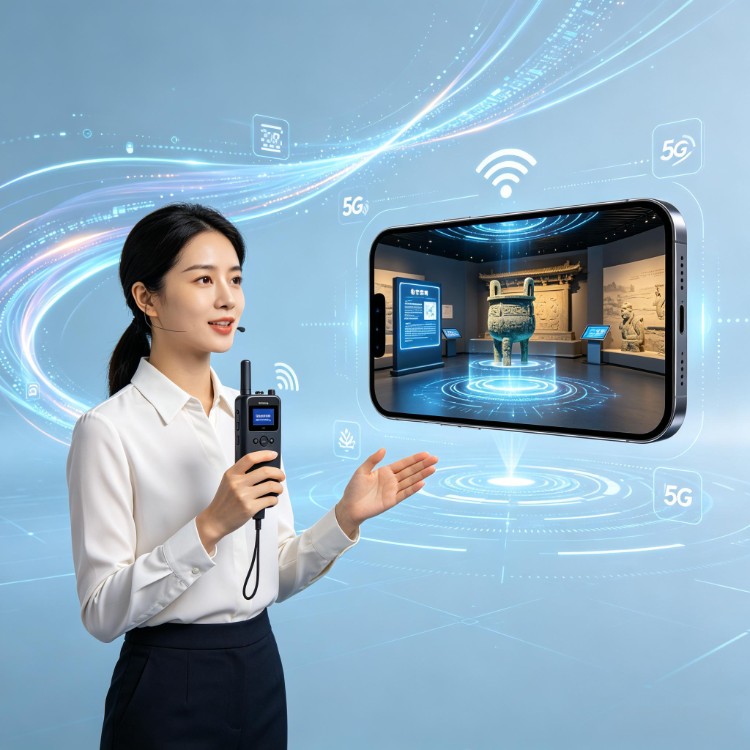
2. Core Principles and Advantages of Technology Integration
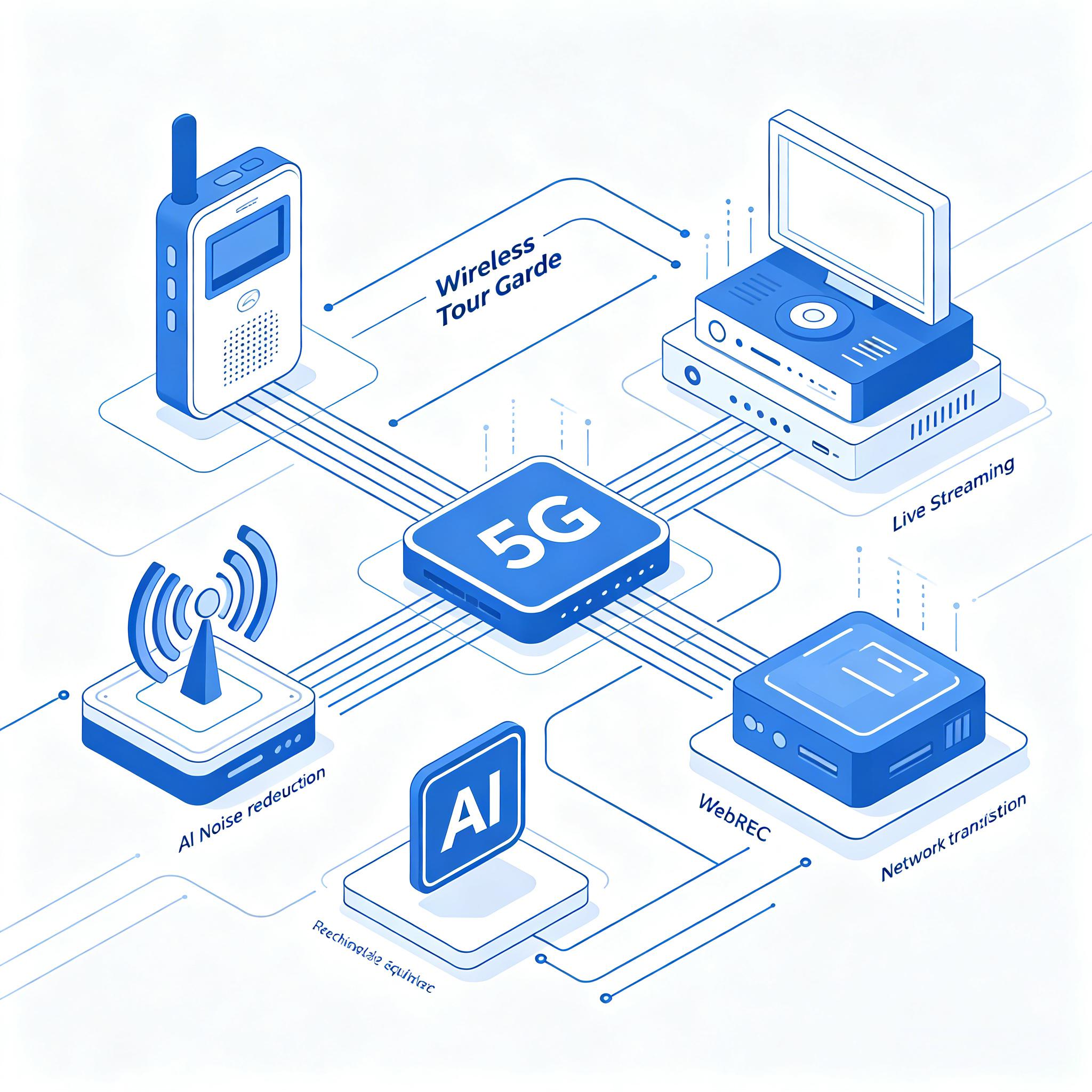
The integration of tour guide devices and live-streaming technology essentially upgrades traditional “local audio transmission” to “global real-time audio-video distribution”.Three Core Technical Supports
Three key technologies underpin this integration: 5G networks and WebRTC protocols enable real-time transmission with end-to-end latency below 200 milliseconds, ensuring synchronization between audio and video; new-generation tour guide devices adopt deep AI noise reduction algorithms to maintain stable voice clarity even in noisy environments of 80 decibels; multi-terminal compatibility supports access via tour guide devices, mobile phones, tablets, computers and other equipment, allowing users to choose preferred listening methods.Four Irreplaceable Core Advantages
Compared with traditional modes, remote explanation services integrated with live-streaming technology offer remarkable strengths:· Breaking time-space barriers: Users can access professional real-time explanations anywhere with internet access. Live-stream content can also be recorded for on-demand playback, realizing one-time narration with permanent reuse.
· Unlimited audience capacity: One guide can serve thousands of viewers simultaneously, eliminating the audience bottleneck of traditional services, especially valuable for large-scale exhibitions and enterprise open days.
· Unified standardization and personalization: Core explanation content can be pre-recorded and standardized to guarantee consistent service quality, while guides provide personalized answers to real-time audience questions, balancing efficiency and user experience.
· Data-driven operation: Background management systems enable real-time statistics of viewership, interaction data, dwell time and other indicators, helping institutions accurately understand user needs and optimize content and services.
3. Practical Application in Five Key Scenarios
Remote explanation services have been widely applied across multiple sectors, demonstrating strong market vitality and potential.Museums and Cultural Venues: Making Cultural Relics Accessible Globally
This is the most mature application field. Henan Museum has launched an intelligent explanation system that provides offline guided tours while broadcasting precious cultural relics globally via live streaming. Putian Museum’s AI-powered intelligent explanation service transforms static exhibits into vivid cultural carriers, attracting massive young audiences.Scenic Spots and Nature Reserves: Balancing Ecology and Tourism
For remote or ecologically fragile scenic areas, tourists can follow professional guides via live streaming to appreciate natural scenery and learn about local history, culture and ecological knowledge. This reduces reception pressure on scenic spots while protecting natural environments.Enterprise Visits and Business Reception: A New Window to Showcase Corporate Strength
Many manufacturing enterprises display production processes, technical strengths and product advantages to off-site clients through live streaming. Recorded visit footage can be reused as marketing materials, greatly improving business reception efficiency.Educational Study Tours and Training: Off-site Practical Classrooms
Remote explanation innovates off-campus practice modes. Schools can organize students to visit science museums, history museums, industrial bases and other venues via live streaming, enabling knowledge acquisition without leaving home. This is safe, convenient and cost-effective for study tours.Exhibitions and Conferences: Expanding Influence and Coverage
The Hangzhou Yunqi Conference 2025 has proven the value of remote explanation. Live-streamed guided tours greatly expand the reach of exhibitions and attract numerous professional audiences unable to attend on-site.4. Core Values Brought to the Industry
The rise of remote explanation services optimizes user experience and delivers multi-dimensional value to service providers.Extending Service Scope from Local to Global
Institutions can expand services nationwide and globally, making high-quality explanation resources accessible to more people. Statistics show that online visitors of museums adopting remote explanation services are over 5 times the number of offline visitors on average.Dual Optimization of Operational Efficiency and Costs
One guide can serve a large number of audiences simultaneously, greatly improving human resource utilization and cutting over 80% of repeated narration costs. Reliance on on-site guides is reduced, lowering personnel training and management expenses.Diversified Innovation of Revenue Models
Beyond traditional ticket and explanation fees, institutions can create new revenue streams through paid live streaming, subscription memberships and content distribution. Many museums have gained considerable extra income from online paid explanation services.Win-Win of Brand Influence and Green Development
Online live streaming and content communication rapidly enhance institutional visibility and brand influence to attract potential customers. Meanwhile, remote explanation reduces travel and carbon emissions, aligning with green development concepts.5. Industry Trends and Future Outlook
With continuous technological progress and growing market demand, the remote explanation service industry will witness three major trends.AI-Driven Intelligent Upgrade of Explanation Services
Generative AI will be deeply embedded into remote explanation systems, shifting services from pre-recorded playback to real-time intelligent interactive narration. AI digital human guides will become mainstream, providing 24-hour non-stop personalized explanation tailored to user interests and demands.Immersive Experience Reshaping User Perception
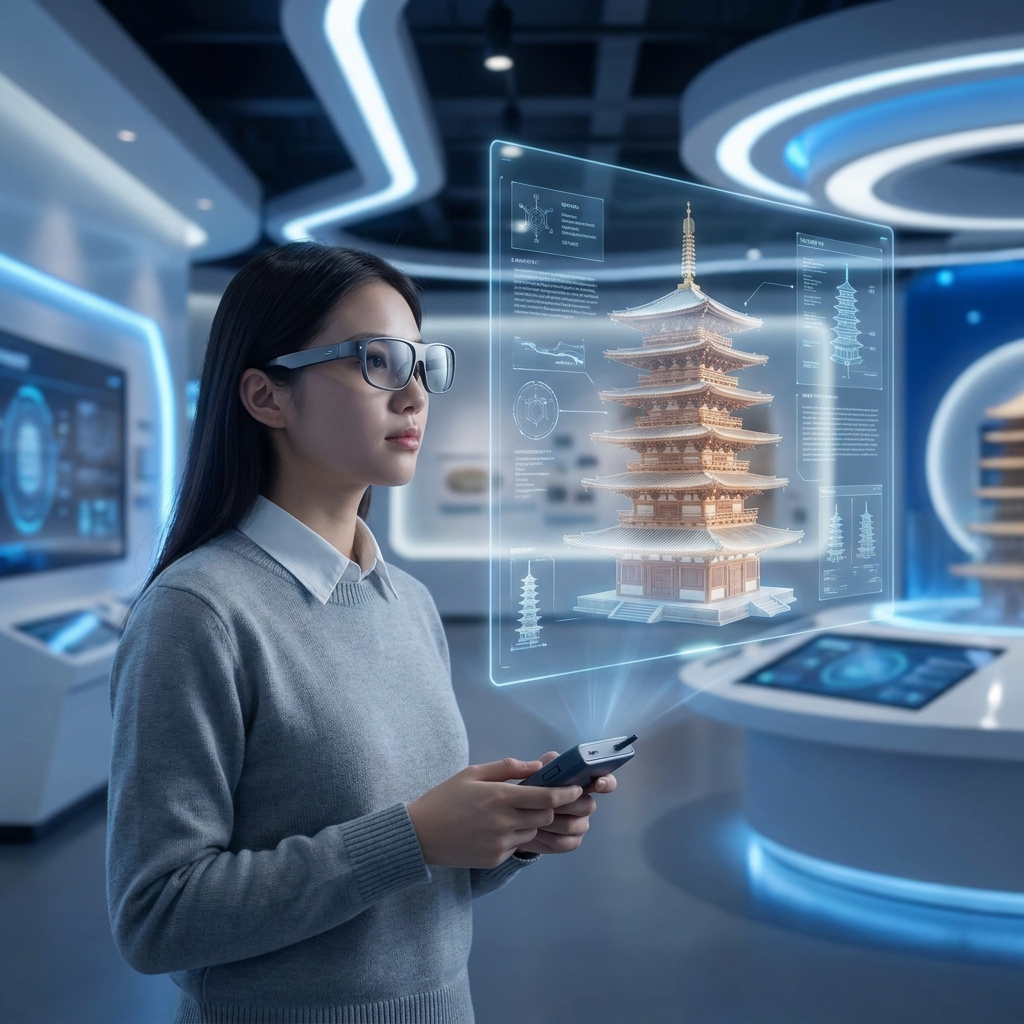
AR and VR technologies will be more closely integrated with remote explanation services to deliver immersive experiences. Users can “enter” museums or scenic spots via VR headsets, interact with virtual guides and even experience historical scene reconstruction.Ecosystem Integration to Build a Comprehensive Service System
Remote explanation will evolve from an independent product to an integrated ecosystem deeply connected with cultural tourism, education, business and other industries. Examples include integrated online-offline tourism services in cooperation with travel platforms and customized online study tour courses with education platforms.Industry forecasts indicate that China’s wireless tour guide device market will reach around 30 billion RMB by 2026, with an annual compound growth rate above 35%. Remote explanation services will be the fastest-growing segment, with a market penetration rate exceeding 45%.
Conclusion
The integration of tour guide devices and live-streaming technology is an inevitable trend for the explanation service industry. It addresses core pain points of traditional modes and unlocks new development opportunities and growth potential. From museums and scenic spots to enterprises and schools, remote explanation services are changing how people access knowledge and information.In the future, with advances in AI, AR/VR, 5G and other technologies, remote explanation services will become more intelligent, immersive and personalized. More than just a tool, they will serve as a vital bridge connecting people with culture, knowledge and the world. For institutions, embracing digital transformation and seizing this trend is key to gaining competitive advantages in the future.