Your Equipment, Your Way: A Simple Guide to Customizing Museum Audio Tour Devices
I talk with tour operators every week. One question keeps coming up: "Can we get something that actually fits our specific needs?"
Off-the-shelf products work fine for many people. But sometimes you need something different. Maybe you want your logo on every receiver. Maybe you need a specific battery capacity for those extra-long tours. Maybe the standard colors just don't match your brand.
The good news? Customizing museum audio tour devices is easier than most people think. Let me walk you through how it actually works.
Why Bother with Customization?
Here's the thing about headsets for guided tours—they're not one-size-fits-all. A factory tour has different needs than a church pilgrimage. A university orientation program faces different challenges than a VIP corporate reception.
When you customize, you get exactly what your specific operation needs. Nothing more, nothing less.
The Customization Process: Three Steps to Your Perfect System
The image above shows the full customization workflow. It looks detailed because it is—but the process itself is straightforward.
Step 1: Let's Talk About What You Actually Need
Every good custom project starts with a conversation. Not a form to fill out. Not a checklist to tick. A real conversation about what you're trying to accomplish.
During this phase, we work through two main areas:
Software Requirements
-
Do you need a standard team audio guide setup where everyone listens on the same frequency?
-
Or are you looking for automatic induction mode, where devices trigger based on location?
-
Any other custom functions you've dreamed up?
Hardware Specifications
-
How should the devices look? Colors? Materials? Logo placement?
-
What battery capacity keeps your tours running without mid-day charging?
-
Any specific circuit board requirements?
-
Do you need certain certifications for your country?
-
How many units are we talking about for production?
This conversation matters. It's where we catch potential issues before they become expensive problems.
Step 2: Bringing Your Concept to Life
Once everything is clear on paper, the real work begins. This is where your custom headsets for tour groups start taking shape.
First, we build a 3D appearance sample. You get to see and feel what your devices will look like. The colors. The finish. The overall feel in hand. This is your chance to say "make that a bit darker" or "can we adjust the logo position" before anything goes into production.
Next up: the circuit board sample. The electronics need to match your requirements exactly. Battery performance. Charging behavior. Signal stability. All tested and verified.
Then comes the software. Writing, debugging, optimizing until everything runs smoothly. Whether you need simple operation or advanced features, this is where it comes together.
Step 3: Testing and Compliance
Nobody wants surprises when the final shipment arrives. That's why everything gets thoroughly tested first.
We verify that both software and hardware perform exactly as agreed. Reliability checks. Compliance verification. Making sure every component meets the standards it needs to meet.
Only when everything passes does production move forward.
Real Examples: When Customization Makes Sense
The Museum That Wanted Consistency
A history museum in Europe had receivers from three different brands, each charging differently, each with its own quirks. They worked with us to create a unified fleet of museum audio tour devices—all matching, all using the same charging infrastructure, all branded with their logo. Their staff spends less time troubleshooting and more time with visitors.
The Tour Operator Needing Durability
A company running daily walking tours in a rainy city needed headsets for tour groups that could handle wet conditions. Standard units worked fine indoors, but outdoors was a different story. We adjusted the materials and sealing for better weather resistance. Problem solved.
The Church Group Wanting Something Special
Religious pilgrimages have unique needs—playing hymns or scriptures at specific moments. The standard radio guide turistiche setup didn't quite fit. A few software adjustments later, and they had exactly what they needed for their spiritual journeys.
Why Work with a Manufacturer Directly?
Here's something worth understanding: when you buy from a middleman, customization gets complicated. You explain what you want. They explain it to someone else. That someone else passes it along. Every step adds confusion.
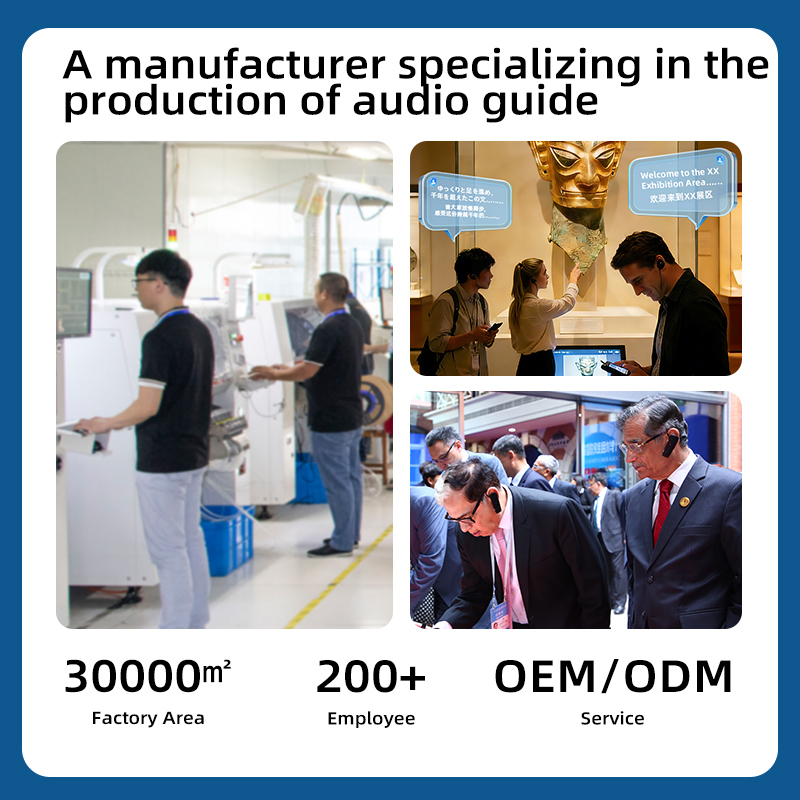
When you work directly with HEFEI HUMANTEK, you're talking to the people who actually build the equipment. We've been at this since 2002, with over 30,000 square meters of workshop space and more than 4,000 clients served.
The people you discuss requirements with understand what's possible and what's not. They know the circuit boards. They know the software. They know what works.
What About After the Custom Order?
Customization doesn't end when the units arrive. You need to know that support continues.
-
2-year warranty on all main units
-
24/7 online response—email or WhatsApp, usually within 2 hours
-
Remote troubleshooting when something isn't working right
-
Spare parts availability for years after your purchase
-
Free firmware updates as improvements become available
If a unit needs to go back for repair, we help with return instructions and customs paperwork. For confirmed critical issues, replacements are available within the warranty period.
Ready to Create Something That's Truly Yours?
Off-the-shelf products are fine. But if you're reading this, you're probably looking for something that fits your operation a little better. Something that feels like it was made for you—because it was.
The process starts with a conversation. No pressure. No complicated forms. Just a chat about what you need, what you're imagining, and whether customization makes sense for your situation.